Welcome to the remains of the Dorothea Quarry, a landscape that stands as a powerful testament to North Wales's slate industry, now recognised as a UNESCO World Heritage Site. This area is not just a single quarry, but a collection of industrial, domestic, and community relics that tell the story of the people who lived and worked here. As you explore, you'll be walking through a landscape that was reshaped by industry, and even a village that was moved to make way for it.
The village of Talysarn itself has a unique story. As the mighty Dorothea quarry expanded in the 19th century, it literally stood in the way. A decision was taken to relocate the entire village approximately 1km to the west, creating the "New" Penysarn we know today. The original village was gradually abandoned, its ruins now being reclaimed by nature, offering an evocative glimpse into the past.
The Cornish Beam Engine: A Masterpiece of Engineering
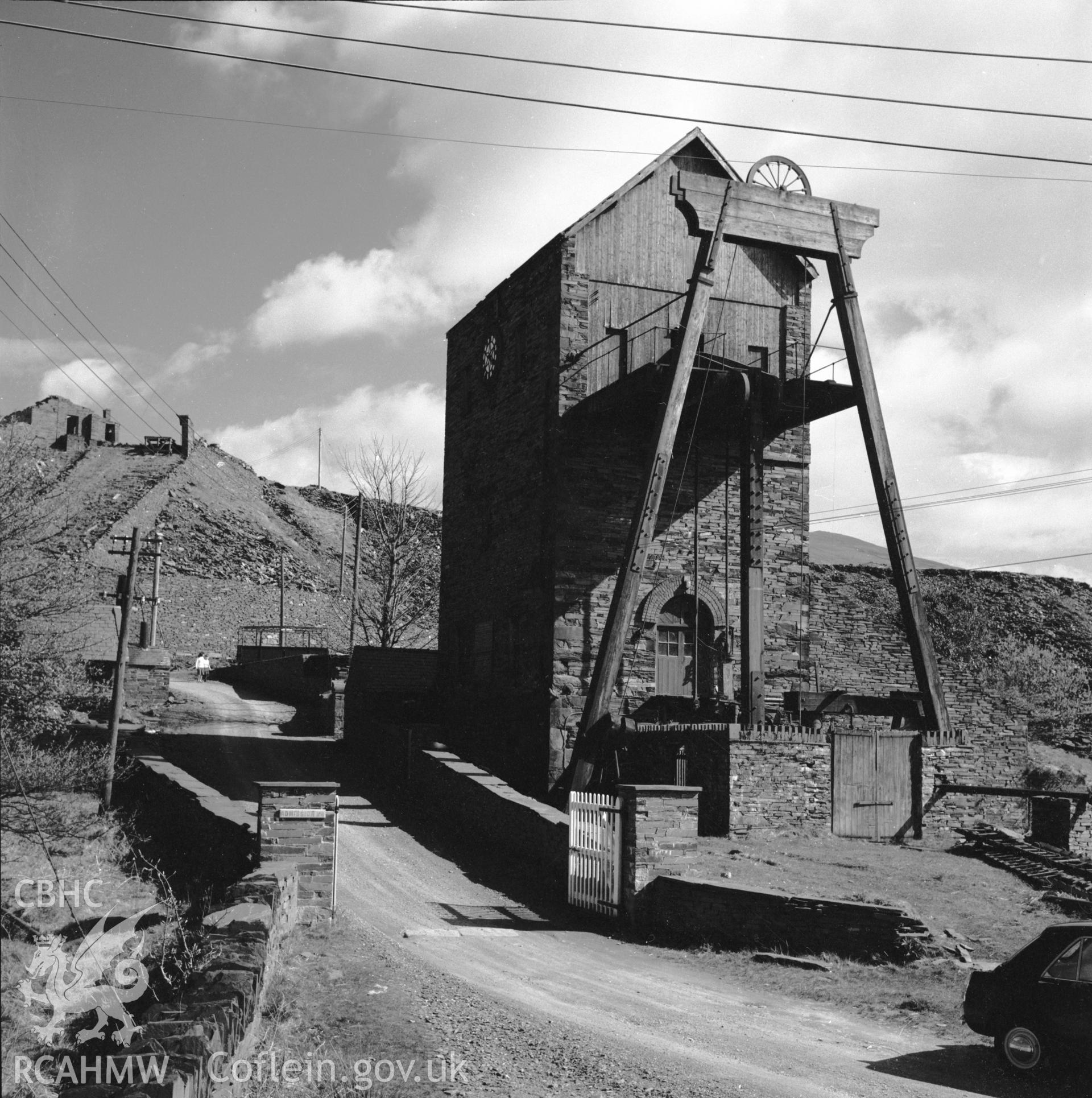
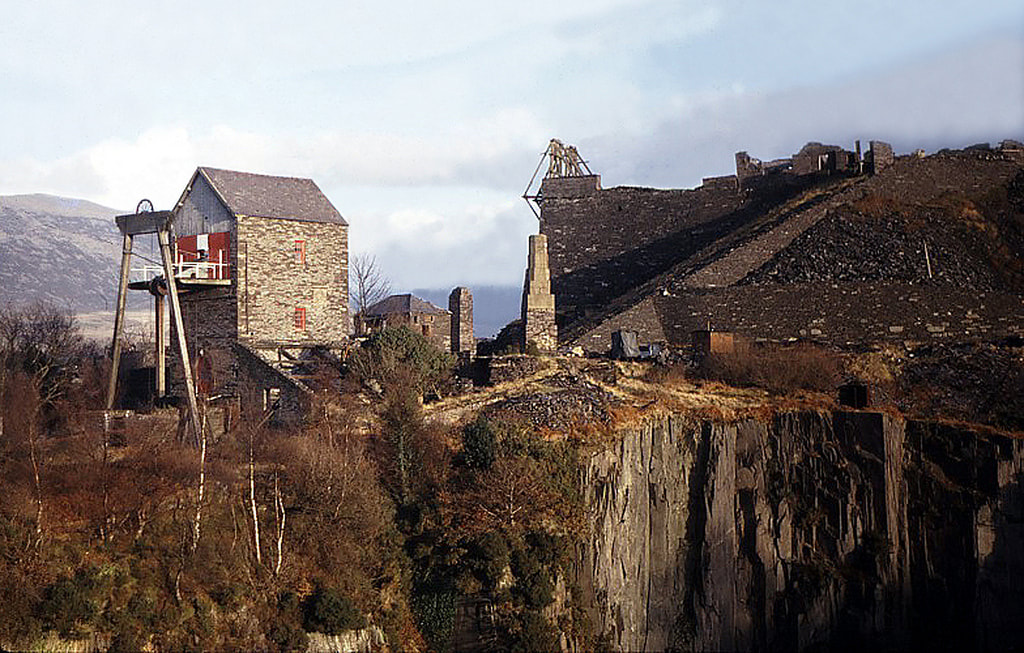
The heart of the site is the Dorothea Quarry pumping installation, a Scheduled Monument. This complex was built for one crucial purpose: to remove water from the ever-deepening quarry pit, which plunged well below the water table. It is an incomparably rich industrial archaeological environment.
The centrepiece is the tall, slate-built engine house, bearing a date stone of 1904. Inside rests a true marvel: a Cornish beam engine. This engine holds a world record: it was the last Cornish Beam Engine to be installed from new anywhere in the world. Built in 1904 by Holman Bros. of Camborne, Cornwall, it is also the youngest beam engine still standing in its original setting.
The statistics of this machine are staggering:
- The Beam: Made of wrought iron—a very unusual feature—it is about 34ft long, 6ft deep at the centre, and weighs around 11 tons.
- The Cylinder: With a bore of 5ft 8in and a stroke of 10ft, it stands over 14ft tall.
- Operation: It normally ran at a stately 5 strokes per minute, powered by steam at 38psi, lifting water from a pump shaft 460ft deep.
- The Complex: Uniquely, it survives complete with its original boiler house containing two Lancashire-type boilers, an open fuel hopper with a ramp, and the remains of a windlass.
The engine worked tirelessly until 1952 when its boilers were condemned. It had one last hurrah in 1956 when the new electric pumps failed, proving the old technology was still reliable. Restoration efforts in the 1970s gave hope for its future, but changes in site ownership have left this world-class monument in a vulnerable state.
The Mill and the Ghost of a Deal
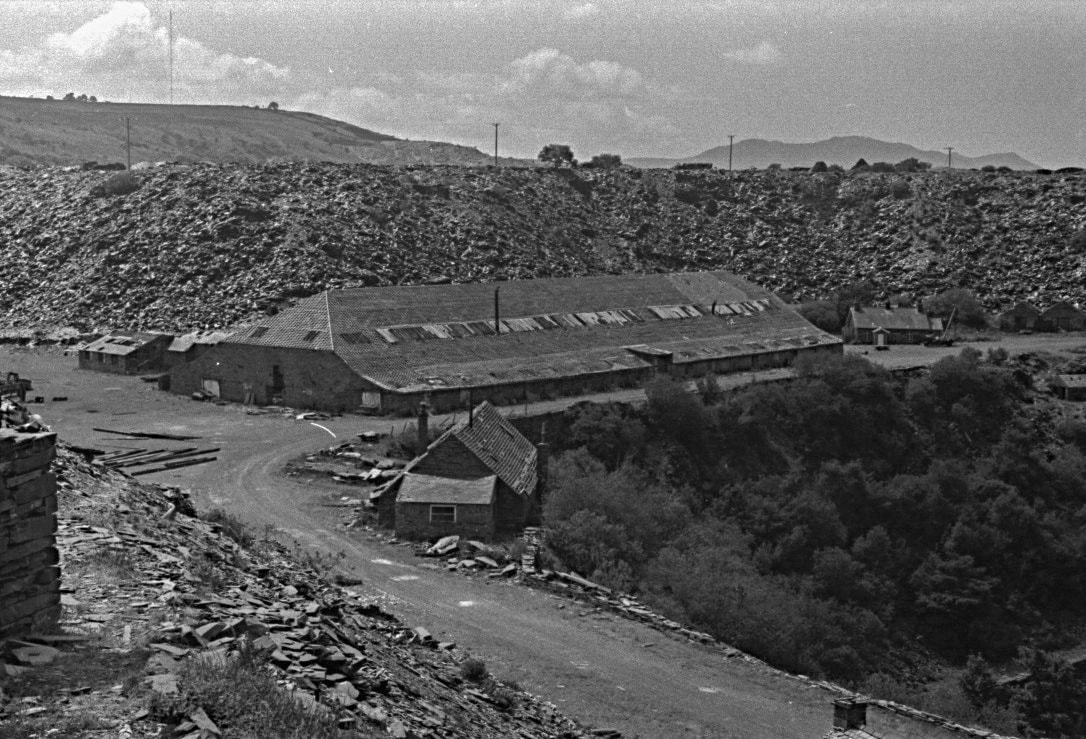
Nearby are the remains of the Mill Office. It was here, on the 12th of November 1901, that a pivotal meeting took place. Mr. Brindley, from Evans and Sons, Pump Manufacturers, met with the quarry manager, W. J. Griffith. Their discussion? The sinking of a shaft for the new pumping engine you see before you—a decision that would lead to the installation of the very engine that came to define the site.
Plas Talysarn: The "Dragon's" Hall
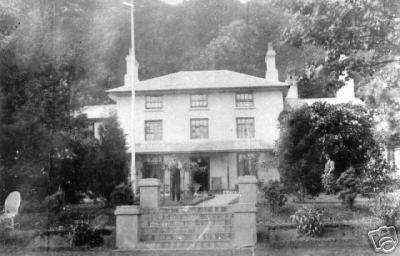
Further on, you'll encounter the poignant ruins of Plas Talysarn, once a grand hall built on the site of a 17th-century farmhouse. This was the home of John Robinson, the larger-than-life owner of the Talysarn Slate Quarry from the 1870s.
Robinson was a complex character. A Victorian "dragon" from Liverpool, he cast a net of ambitious, sometimes half-real, schemes across North Wales in pursuit of wealth—the fabled "John Robinson Tramway," whose locomotives existed only on paper, being a prime example. Yet, local historian Prof. Gwynfor Pierce Jones noted he was also a much-loved and respected figure, a man of the people who was generous to those in need and even paid for the construction of St. John's Church in Talysarn. It is said he could do the work of his quarrymen as well as manage the company, earning their respect and allegiance.
In its heyday, the hall was very swish, with extensive gardens and an ornamental fountain. This fountain was built as a 21st birthday present for the last surviving daughter of the Plas. The statue from the fountain was sold in the 1950s, and despite attempts to trace it to Betws-y-Coed or Llangollen, its location remains a mystery.
John Robinson died in 1900, and his son Thomas took over, only to pass away himself in 1905. The family held onto the house until it was sold to the Dorothea Company in 1942, but it was soon abandoned and fell into ruin.
Echoes of Transport: Rails and Horses
The story of Dorothea is also a story of transport.
-
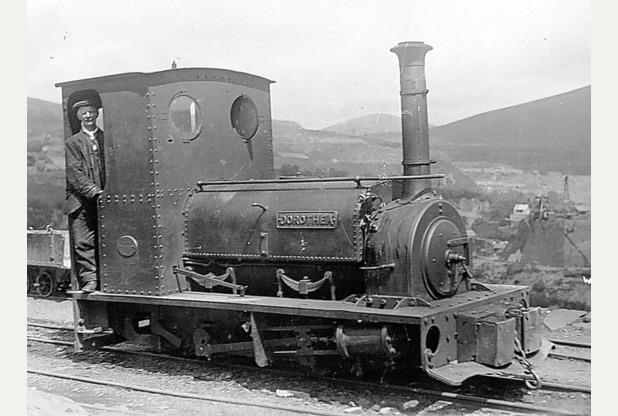
The Locomotive "Dorothea": This Hunslet locomotive, new from Leeds in 1901, spent its entire working life at the quarry, hauling slate on the tips from the East Pyramid. It cost £587.19s.5d. After leaving the site in 1970, it is now preserved and running on the Launceston Steam Railway.
-
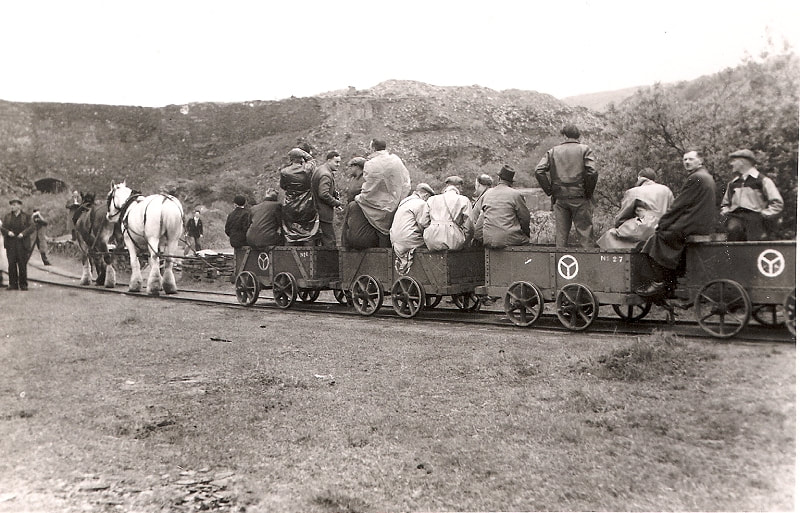
The Nantlle Railway: This horse-powered tramway, of a unique 3ft 6in gauge, originally ran from Pen yr Orsedd Quarry to Caernarfon. Remarkably, it remained horse-drawn until just a couple of years before its closure in 1963.
Prince and Corwen
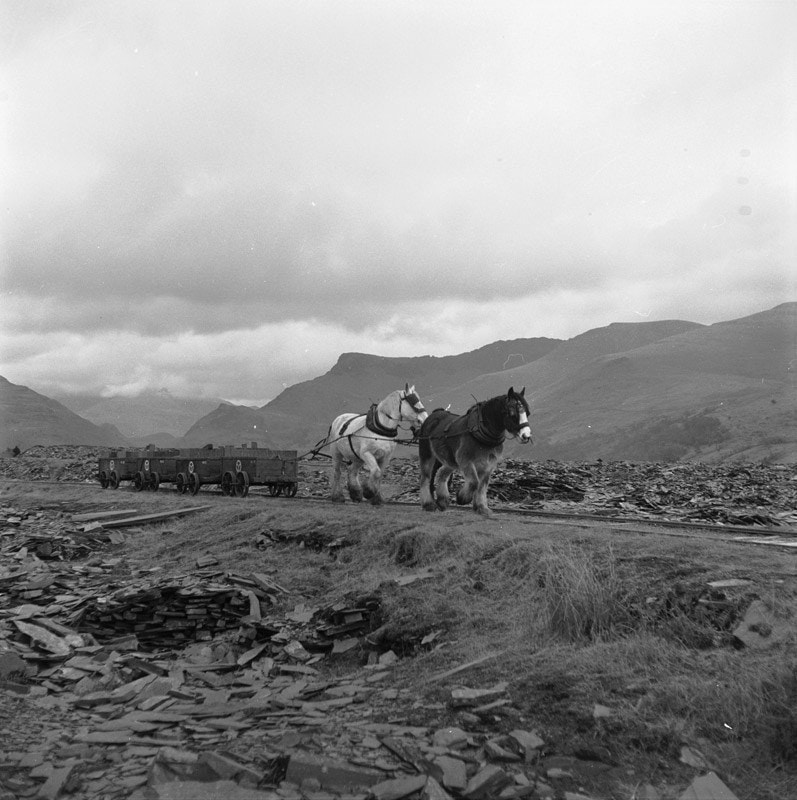
No account of Dorothea is complete without its two celebrity horses—the last to haul slate from Pen yr Orsedd. Corwen, the white mare, and her son, Prince, were the dynamic duo capable of doing the job by themselves. A wonderful photograph by Geoff Charles captures them against the stunning backdrop of Mynydd Drws y Coed and Yr Wyddfa (Snowdon).